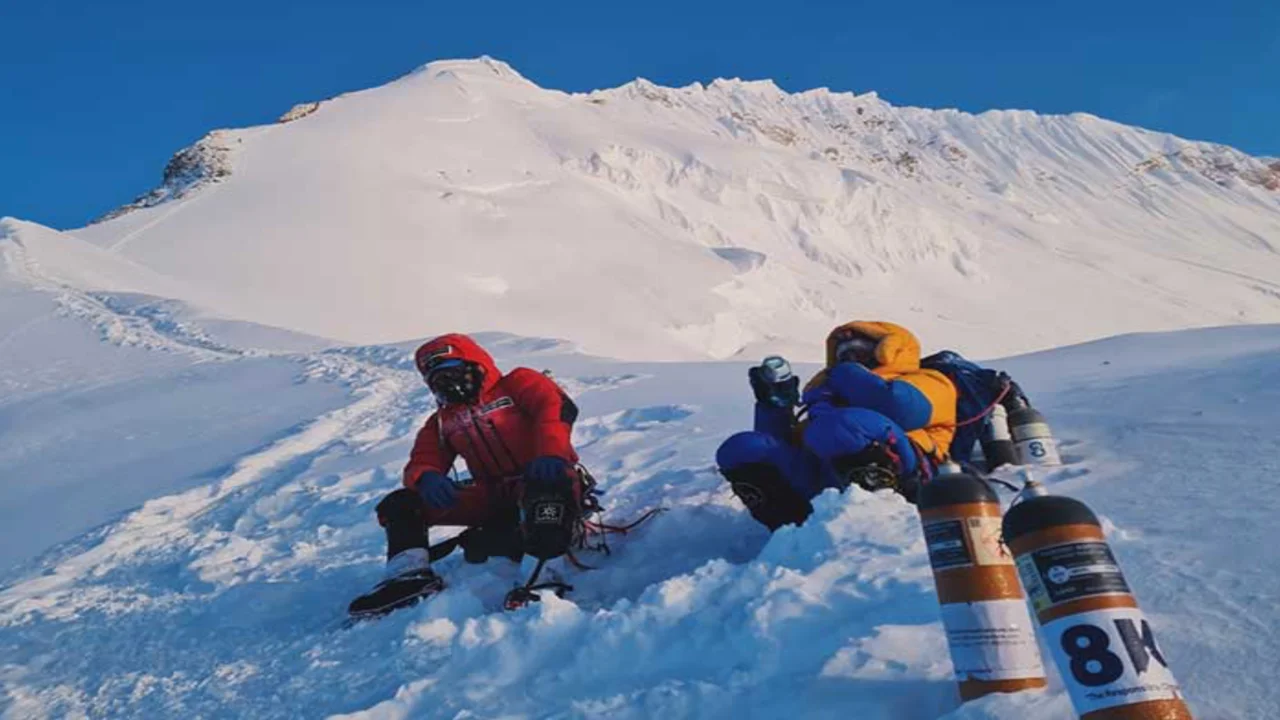
“Only the Bold Earn the Heights”: Ten Climbers Who Changed Mountaineering

A short list, big footsteps. These ten didn’t just reach summits. They shifted what the rest of us think is possible up high.

Sir Edmund Hillary & Tenzing Norgay

Everest, 1953 — the door opens

May 29, 1953. Two men step onto the highest point on Earth via the South Col. Careful pacing, fixed ropes, oxygen discipline, and quiet trust in each other made it work. The photo shows Tenzing with the ice axe. Hillary took it.

Reinhold Messner

Oxygen-free Everest and the 14×8000 revolution

First Everest without bottled oxygen (with Peter Habeler in 1978). Solo, no-oxygen Everest in 1980. Then every 8,000-meter peak without O2. His style—light, fast, few camps—redefined “how,” not just “what.”

Junko Tabei

First woman on Everest; first woman to complete the Seven Summits

Everest in 1975 with the Ladies’ Climbing Club of Japan, then all continental high points by 1992. Precise, unshowy, relentless. She turned “firsts” into a pattern.

Chris Bonington

The strategist of big Himalayan walls

Led the Annapurna South Face success (1970) and the audacious Everest Southwest Face siege (1975). Later summited Everest at 50. Known for turning complex teams and logistics into a single rhythm.

Reinhard Karl

Summit and story

First German atop Everest in 1978. Also Gasherbrum II in 1979. Photographer, writer, careful observer of fear and motive. Died in an ice avalanche on Cho Oyu in 1982, leaving words that still guide newcomers.

Hermann Buhl

Nanga Parbat, 1953 — alone at the sharp end

A solo, oxygen-free first ascent of the “Killer Mountain.” Long, thin margins. He bivouacked standing near the summit. No other 8,000-meter first ascent was done solo.

Maurice Herzog

Annapurna I, 1950 — the first 8,000er

A French team reached Annapurna before oxygen, GPS, or good maps. Frostbite took fingers and toes. The climb started the modern Himalayan race and the debates about tactics and cost.

Jerzy Kukuczka

New lines, winter firsts, and the “other” crown

All fourteen 8,000ers by 1987, mostly via fresh routes or in winter conditions. Little budget, big boldness. Killed in 1989 on Lhotse’s South Face, chasing one more hard line.

Wanda Rutkiewicz

First woman on K2, 1986

No supplemental oxygen. Technical, patient, tough. She logged multiple Himalayan summits and aimed higher still. Vanished on Kangchenjunga in 1992, partway through an audacious plan.

Gaston Rébuffat

The north faces and the voice of the craft

First to complete the six great North Faces of the Alps. Guide, filmmaker, teacher. His calm explanations and clean style brought thousands into alpinism the right way.

Why these ten?

They cover firsts, style shifts, and stories that stuck. If you’re new to climbing history, start here, then follow the routes they opened.
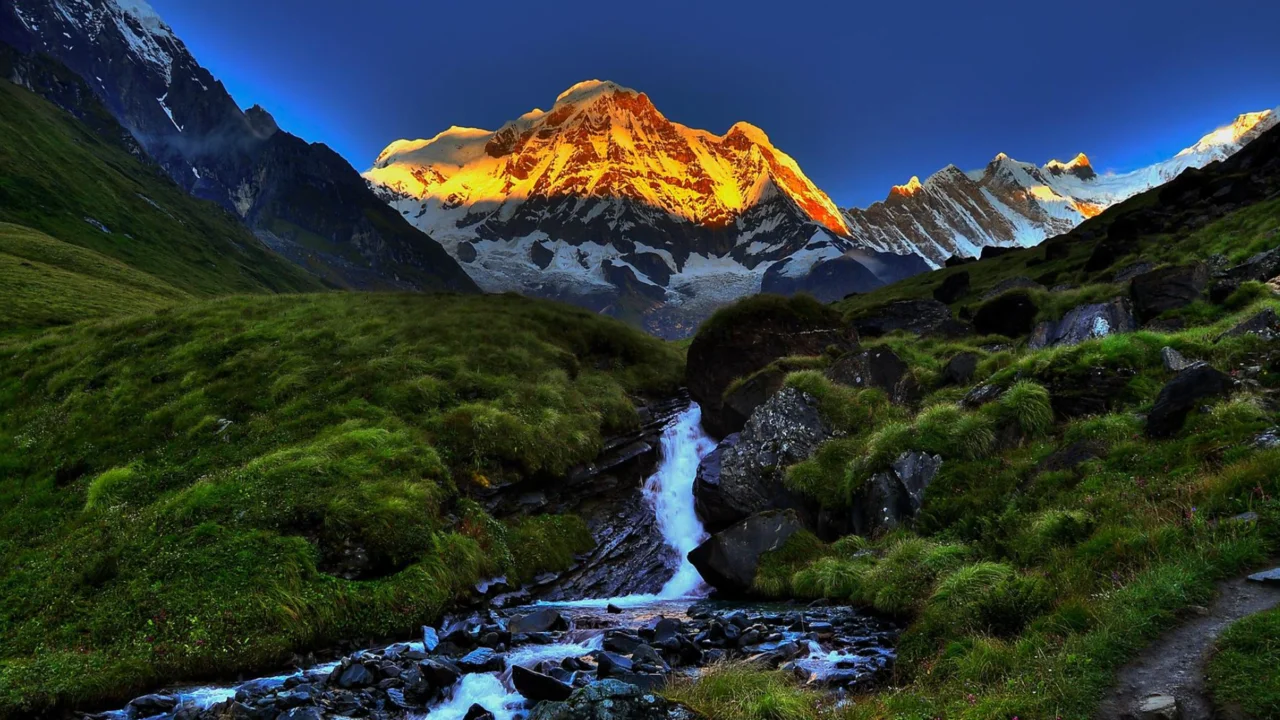
Deadly Beauty: Five Mountains Where Small Errors Become Fatal

A 2025 rescue on Pobeda Peak exposed how objective hazards, not grades, drive mortality on big peaks. Dates, cases, and comparative data below.

Pobeda / Jengish Chokusu (7,439 m)

Where and why

Tien Shan, Kyrgyzstan – China border. The world’s northernmost 7,000-er. Bitter cold, short weather windows, high winds, and avalanche-prone ridges dominate risk. Reports over decades attribute ~80+ deaths to the mountain; Russian press summarize it as “about one in three summiters never returns.” 

2025 timeline, verified

12 Aug: Russian climber Natalia Nagovitsyna breaks a leg near ~7,150 m.
15 Aug: Italian alpinist Luca Sinigaglia dies while ferrying supplies to her.
22 Aug: Rescue halted as winds escalate; officials cite impossibility of evacuation from that altitude on Pobeda.
27 Aug: Authorities report no signs of life; she is presumed dead.
Multiple attempts, a helicopter crash, and drone searches failed to change the outcome.

Historical markers

Documented multi-fatality spells include three deaths in one week in Aug 2021. A 2021 season summary noted 3 deaths for 21 summits, underscoring narrow weather windows.

K2 / Chogori (8,611 m)

Signature hazard

The Bottleneck (~8,200 m) sits under unstable seracs. On 1 – 2 Aug 2008, collapsing ice and severed lines contributed to 11 deaths during descent. In 2023, Pakistani porter Mohammad Hassan died at the Bottleneck, sparking an ethics debate. 

By the numbers

Historically about one death per four summits prior to 2021; ~800 summits and 96 deaths by 2023. K2 is also the northernmost 8,000-er, with harsher weather than Everest.

Annapurna I (8,091 m)

Record and context

Using the broad “deaths per summits” metric, Annapurna leads the 8,000-ers at ~32% across the classic 1950 – 2012 window; several syntheses and Guinness echo ~30%+. Modern seasons are safer but still high-risk.

Case example

14 Oct 2014 storms and avalanches tied to Cyclone Hudhud killed at least 43 across Annapurna – Dhaulagiri. Nepal’s deadliest trekking disaster illustrates how regional weather spikes risk beyond the climb itself.

Kangchenjunga (8,586 m)

Risk profile

Third-highest peak. First ascent in 1955 by a British team that stopped a few feet shy per local custom. Depending on the dataset and period, fatality ratios range from roughly 16% to near 29%. Causes: long, remote approaches, storm volatility, and avalanche terrain.

Nanga Parbat (8,125 m)

Risk profile

“Killer Mountain.” Historic fatality ratios near ~20% in long-term analyses. First ascent was Hermann Buhl’s solo push on 3 Jul 1953, still unique among first ascents of 8,000-ers.

Everest / Jomolungma (8,849 m)

Popular yet unforgiving

Everest amasses the most total deaths because of volume, not highest rate. Spring 2023 closed with a record final death toll update of ~20 on the Nepal side after initial counts of 17 – 18. Nepal responded in 2025 with a draft law to restrict permits to climbers with prior 7,000-m experience.

Comparisons that matter

Objective hazards vs statistics

  • Annapurna tops broad historical fatality ratios among 8,000-ers.
  • K2 combines steep technical ground with serac exposure; 2008 remains a benchmark catastrophe.
  • Pobeda is lower than the 8,000-ers but farther north, colder, and logistically harder to rescue; 2025 showed rescue above ~7,000 m there is effectively infeasible.

Recent seasons

  • Everest 2023: peak fatalities alongside record permitting; crowding and altitude illness prominent.
  • K2 2023 – 25: continued incidents from rockfall and serac instability, even on “good” weather days. 

Take-home for non-specialists

Technical grade alone misleads. Latitude, rescue feasibility, search and avalanche exposure, and length of summit push determine survival odds more than a route label or a single difficulty pitch. The Pobeda 2025 sequence is the clearest current example.